1. Outline
| Country Name |
Afghanistan map |
| Capital |
Kabul |
| Population |
25,100,000 |
| Area |
652,225k㎡ (1.7 times larger than Japan) |
| Ethnic Groups |
Pashtun 43%, Tajik 24%, Hazara 6%, Uzbek 5%, Other 22% |
| Languages |
Afghan Persian or Dari, Pashtu etc. |
| Religions |
Sunni Muslim, Shi'a Muslim etc. |
sources: Ministry of Foreign Affairs Official Web Site
2. Conflict Issues/Needs
A Long Battle and The Largest Number of Refugees
in History
The fighting that began in 1979 with the invasion of the former Soviet Union has intensified over the years, forcing many Afghans to flee their home. As a result, they sought refuge in neighboring countries like Pakistan and Iran. Internal ensued after the withdrawal of the Soviet Army in 1989. In 1990, the number of refugees to 6,200,000--a little less than half of the
world's refugee
population.
Although
Afghan refugees began to return after the cease fire in 1992
, in 1993, armed conflict erupted again. Ever since, refugees have continued to flow out of the country and return, only to be forced to flee again.
The Difficult Reality of Returnees' Lives
The land has been abused by the 20 years of battle and the record-breaking droughts of recent years. The large numbers of refugees and Internally Displaced Persons (IDPs) have been forced to forge a life of refuge in such difficult environments. However, Afghan refugees started returning home after the provisional government was established in December 2001. Between 2002 and 2004, the number of returnees assisted by UNHCR reached an estimated 3,060,000 people. Nevertheless, returnees have had a difficult time rebuilding their lives, since their homeland has been utterly devastated, and there are no means to generate an income. There is an increasing number of people who have become refugees again in neighboring countries, while others are living as IDPs in cities such as Kabul. It is urgent that living conditions, such as housing, infrastructure, education, and employment opportunities are repaired in order to promote sustainable repatriation and resettlement in Afghanistan.
| 2)
Our activities in Afghanistan
|
(1) JEN's Assistance Program Policy
Repatriation and Resettlement Assistance Program with Local Participation
JEN staff flew to Afghanistan to implement 'Emergency Assistance for Drought Victims' in August 2001. However, due to the 9/11 terrorist attacks and the subsequent retaliation by the US Army, JEN redirected its assistance program to the emergency assistance of people who became refugees and IDPs due to the conflict and drought. When the provisional government was established at the end of 2001, numerous refugees returned home.In response, since 2002, JEN has been implementing the 'Repatriation and Resettlement Assistance Program' in Parwan Province to support the self-reliance of returnees.
We teamed with local people and communities, aiming to enhance their self-reliance through our projects. In the reconstruction of homes and bridges/roads, Afghan returnees cooperate with each other to undertake the reconstruction labor. In the School Reconstruction Project, JEN encouraged returnees to organize School Management Committees so that local people themselves make the decisions regarding reconstruction, as well as the maintenance and supervision of the school. JEN continues to assist the socially vulnerable, such as children, women, seniors, and people with disabilities.
(2) Current Project
Water Pipe Project
One of the biggest problems Afghanistan faces is the shortage of safe drinking water, which is indispensable for their lives. According to the report of the Ministry of Rural Rehabilitation & Development, 15 million farmers out of 19 million farmers do not have access to safe drinking water. In addition, infant mortality rate under the age of five in Afghanistan is 25%, which is much higher than that of the neighbouring countries, which is about 10%. About half of such deaths are due to unsafe drinking water. In Parwan Province, located in the north of Kabul, chronic diseases caused by unsafe water has been a serious problem at many regions including the provincial capital of Charikar by deterioration of quality of water and the shortage of water caused by recent increase of population.
Given this situation, JEN is working to supply safe drinking water in Parwan Province, supported by the Ministry of Foreign Affairs of Japan and cooperating with Parwan government and other international organizations. In three priority regions in Parwan and at the provincial capital of Charikar, JEN is building and repairing water supply system in order to improve the sanitation. JEN is building and repairing pipelines for supplying safe drinking water, cleaning and repairing underground canals, and holding workshops to teach basic knowledge of sanitation.
School Rehabilitation/Construction Projects
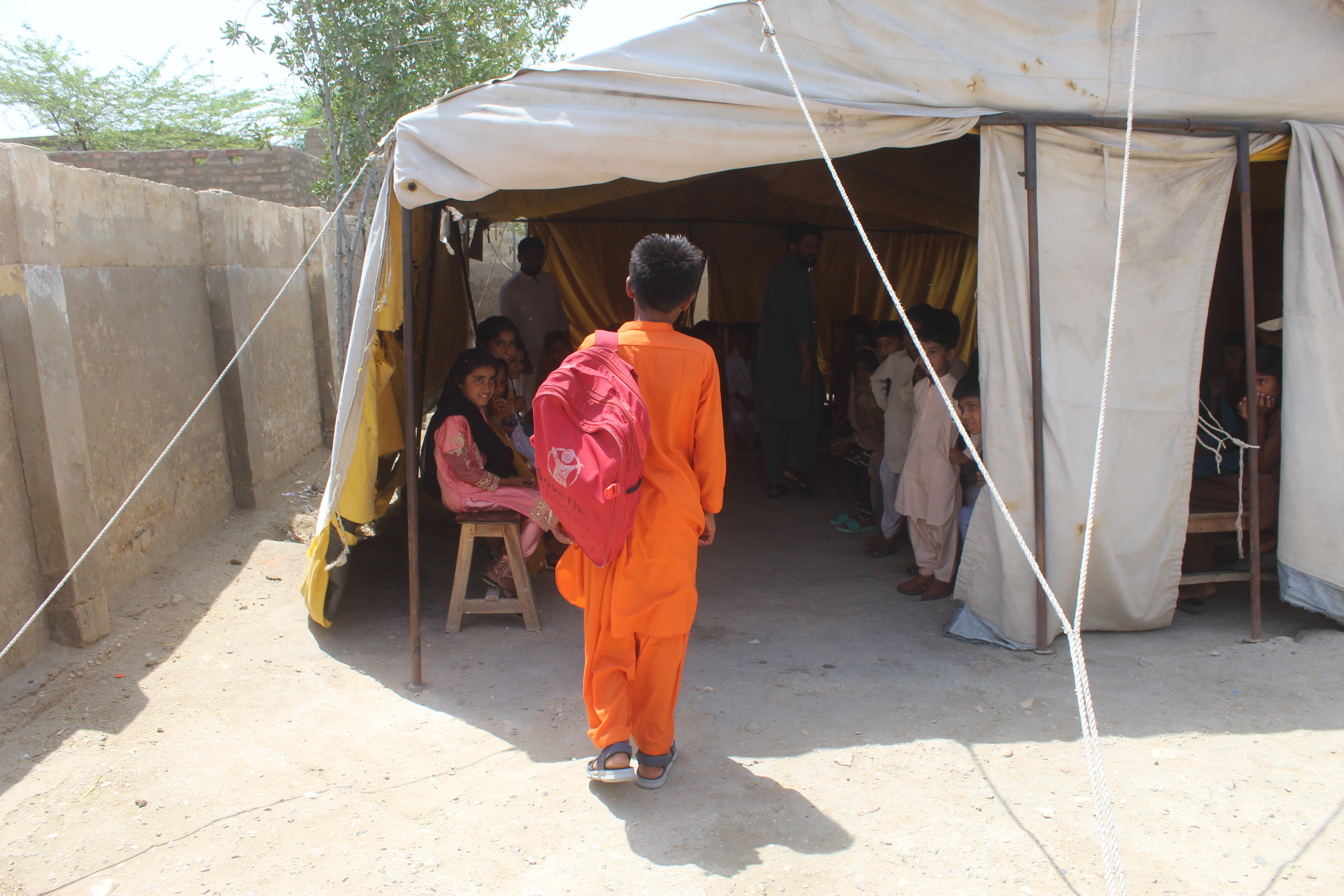
A large number of schools were destroyed by the long years of armed conflict. In addition to the devastation, the increase in the number of students due to refugee returns has created a shortage in the number of schools needed. Consequently, children are forced to attend classes outside in tents, under trees, and in unsafe buildings.
Since 2002, JEN has been conducting the School Rehabilitation Project in order to improve the educational environment. In 2005, JEN also built schools in areas where classes are being conducted without any building structure. In the School Rehabilitation and Construction Projects, JEN helped establish School Management Committees consisting of local authorities, residents, and teachers. The School Management Committees discuss priority issues in rehabilitation and construction, solve problems during construction work, and talk over the management and supervision of the school after the end of the project. Through these committees, JEN aims to strengthen people's sense of ownership, and enhance their awareness of the value of education. In addition, as local people themselves implement the rehabilitation and reconstruction, this program promotes employment opportunities for returnees who have limited means of income.
Literacy Education Project
In Kabul, the capital of Afghanistan, many refugees have still returned, and the number is believed to be half of returnees in whole Afghanistan.
Particularly, a place called Carte Sakhi in Kabul's number 3 area was the shooting battle field from the hilly area during the past civil war. Most of citizens who lived in the hilly area had to evacuate, therefore, majority of citizens were returnees and were deprived the opportunity of education from them during evacuation.
And also, numerous families have no stable occupation, so they work daily job and create an artwork for living. However, they are still under severe life circumstance due to low income.
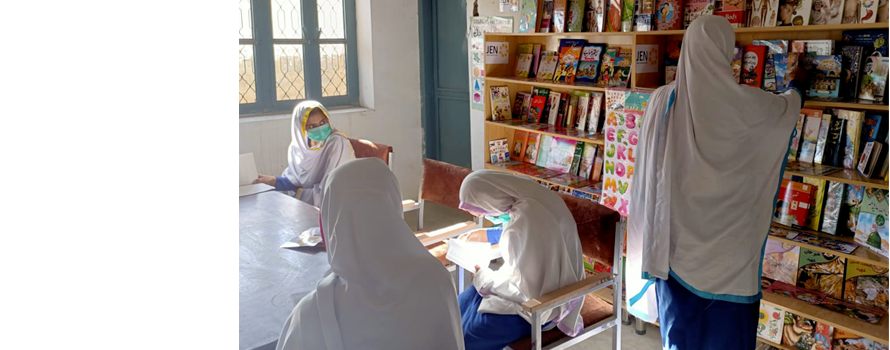
This is why JEN started the literacy education project in this area from Jan 2006. Presently, 162 students (6 classes) have been learning the literacy and basic calculation ability.
In order to acquire such ability, students will be able to have an opportunity to improve their income, moreover, the project aims to contribute the upskilling women whose several chances are socially limited for acquiring the opportunity of education.
(3) Previous projects
Well-Digging Project (2005/6 - 2006/6)
Although there are small wells and canals in the villages of Charikar in Parwan Province, shortage of water is a serious problem due to the many years of drought. Presently, the quality of water is poor, causing adverse effects on the health and living conditions of local people, who often die of diarrhea. Since 2005, JEN has been initiating the Well-Digging Project in the farmlands of Charikar in order to improve living conditions by providing access to clean water.
In this project, a committee for well supervision and maintenance, consisting of JEN, the local government, and local people, was established. The committee agrees upon necessary items needed for project implementation, such as the locations for well-digging and solutions when the water pumps malfunction. The committee also discusses the maintenance and supervision of the wells once the project begins, in particular how to subsidize the fees for repair. Through this activity, it is possible to establish a management system for the wells when the project is completed. The project aims to raise local people's awareness of the value of participating in social activities that lead to a healthy living environment.
Housing Reconstruction Project (2002/6 - 2006/6)
Due to devastation and inhabitable living conditions, many returnees have lost their homes and are living with relatives. Some of them are trying to restart their lives in difficult conditions, renting from relatives a space as small as 8 square meters for a family of 10. Since 2002, in the area of Charikar in Parwan Province, JEN has been assisting Afghan returnees such as women, the elderly, and people with disabilities, who have difficulties reconstructing their homes by themselves.
Target populations for our projects are selected in cooperation with a committee comprised of local residents and the local government. JEN provides a portion of the building materials and technical advice for construction. JEN encourages returnees to maximize their potential in order to enhance their self-reliance. For example, they procure on their own the material that they can get themselves, such as sundried bricks, and they conduct the actual reconstruction as well. In addition, in 2002, JEN trained engineers and manufactured building materials, and offered trainings in wood processing in collaboration with local NGOs.
 |
 |
Bridge and Road Construction Project (2004/4 - 2005/5)
JEN constructed a road 17km long, and two bridges in Ashaba, Parwan Province. Local people themselves worked on the construction, and received food from WFP as compensation. The roads and bridges of 26 villages in mountainous regions, where aid had been difficult to reach, were constructed. As a result, villagers were able to move and transport goods more easily, and children's commute to school was improved.
Self-Reliance of Women Project (2003/8 - 2004/2)
I
In an area in Kabul where many Hazara (an ethnic minority) people live, JEN conducted trainings for traditional carpet weaving and literacy classes, in collaboration with local NGOs. This was a project for socially vulnerable women: returnee, widowed, elderly, and disabled women. We also organized management trainings in order to train women leaders who are able to implement and continue future activities.
“Afghan-Kids” Educational Support Project for Afghan Children (2002/4 - 2003/5)
Three NGOs collaborated to organize donations for Education Assistance in Afghanistan. These donations made it possible for JEN to renovate schools in Charikar, Parwan Province. Many people from local schools and communities actively participated in the renovation, and they continue to supervise and manage the schools.
Naharin Earthquake Disaster Assistance Project (2002/3 - 2004/6)
JEN distributed 3,000 blankets for victims of the earthquake that occurred in Bagran Province in March 2002. In order to assist earthquake victims to have access to safe water, we also carried out well digging in the new locations where victims had to resettle.
Daily Necessity Distribution Project (2002/3 - 2002/7)
In Kabul, JEN made and distributed packages of essential goods for returnees who had returned without any of their possessions. In order to distribute as many items to as many people in need, JEN prepared two kinds of packages for families with women or elderly heads of household: one with daily necessities and another with kitchen utensils.
Stationery Distribution Project (2002/1-2005/5 etc.)
In January 2002 we distributed pencils and notebooks to 2,300 students (1,700 girls) at schools in East Kabul. Through this activity, we supported female students who have not had educational opportunities for the past 5 years. In May 2005, we also distributed stationery--notebooks and color pencils--donated from Japan to 4 kindergartens in Parwan Province.
Emergency Winter Assistance (2001/12 - 2002/3, 2002/12 - 2003/1)
In the winter of 2001, JEN assisted IDPs who were trying to survive a harsh winter. We distributed blankets, kitchen utensils, buckets, and heaters. In the following winter in 2002, we also sent 2,000 packages of jackets and socks for children, and 918 sets of daily necessities such as cooking utensils.
(4) Project in Pakistan
JEN opened two offices in Peshawar and Islamabad in October 2001 to execute emergency winter assistance in Afghan refugee camps along the border of the North West Frontier Province. In April 2003, given that the majority of refugees began to return home, JEN ended the project and withdrew from Pakistan.
Blanket Distribution
(2002/1~2002/6, 2002/12~2003/3)
JEN distributed 20,000 blankets, which were provided by the
Association of Japanese Agencies for Supporting Africa (AJASA),
to Afghan refugees who were living in harsh environments. The
blankets were used in a variety of ways, such as jackets, rugs,
and bags for carrying items. It was useful, not only in refugee
camps, but also upon return to their homelands. |
 |
Distribution of Emergency
Winter Supplies Projects (2001/12~2002/3)
We distributed necessary supplies for refugees in the camps
so that they could live through the severe winter. 12,000
winter jackets were provided from Fast Retailing Co.; blankets,
mats, winter jackets, and daily necessities such as plates,
buckets, and heaters were also distributed. |
 |

Afghanistan
I. Aperçu Géopolitique
| Nom du Pays |
Afghanistan Plan |
| Capitale |
Kaboul |
| Population |
25,100,000 |
| Superficie |
652,225k㎡ |
| Groupes Ethniques |
Pachtouns 43%, Tadjiks 24%, Hazaras 6%,
Ouzbèks 5%, autres 22% |
| Langues |
l’afghan, le perse, le dari, le pachtoun,
etc. |
| Religions |
musulmans (sunnite, chiite, etc.) |
Sources:le Site Officiel de la Ministère des Affaires Étrangères
du Japon
II. Contexte Historique
A. Eau et Assainissement
Une des plus importantes difficultés auxquelles affronte
l’Afghanistan à ce jour est une grave pénurie d'eau potable.Selon
le rapport du Ministère Afghan de la Réhabilitation Rurale et du
Développement,15millions sur 19 millions des ouvriers agricoles
n’ont aucun accès à l’eau potable.Cette pénurie augmente
considérablement le taux de la mortalité infantile des moins de
cinq ans jusqu’à 25 %, alors que celui des pays voisins est de
estimé à 10 %.
B. Éducation
Nombreuses écoles ont été détruites suite aux conflits
et le manque d’infrastructures scolaires est aussi aggravé par
le rapatriement des écoliers. Plus de 35 % des enfants n'ont
pas accès à l ecole.
C. Création de Revenus
Nombreuses familles n’ont aucune occupation stable
et ainsi dépendent seulement de petits travaux et de l aide alimentaire.La
situation est encore plus difficile pour les femmes qui très souvent restent
exclues des activités scolaires, publiques, économique et sociales.
JEN Assistance
JEN a ouvert en octobre 2001 deux bureaux régionaux au Pakistan,
afin de répondre aux besoins les plus urgents dans les camps
des réfugiés afghans situés à la frontière du Nord-Ouest du Pakistan.
Présent actuellement à Kaboul, JEN continue sont assistance aux
populations.
JEN a choisi d’intervenir dans la Province
de Parwan situé au nord de Kaboul vers laquelle un grand nombre
de rapatriés sont retournés.
-
-
- <Exemple de projet>
A. Projet d’Eau Potable, août 2006/juillet 2007
Nombre de Populations:15,000 – 20,000 personnes
2,300familles,14,000 – 15,000 personnes en 2006
En collaboration avec le gouvernement
municipal JEN favorise la construction et la réhabilitation
des canaux et conduites d’eau potable dans la ville
de Tcharikar et les trois régions principales de la
Province de Parwan.Le projet est financé par le Ministère
des Affaires Étrangères du Japon.
B. Projet Construction
d écoles
| Nombre de Bénéficiers:12,196 personnes en 2006 |
9,223
personnes en 2005 |
3,253
personnes en 2004 |
- 1. Projet de Reconstruction
et Gestion des Écoles - depuis 2002
Nombre de
Populations Ciblées en 2006 : 2 écoles, 1,000 écoliers,
JEN met en œuvre des Projet de Réhabilitation d Écoles
depuis 2002 afin d’améliorer l' environnements scolaires
des enfants. En 2005 et 2004, JEN a aussi construit des
écoles dans des régions auxquelles les enfants n’avaient
aucune salle de classe. Par ailleurs, JEN a établi
des Comités Exécutifs composés par le gouvernement
municipal, le corps d’enseignants ainsi que des habitants
locaux afin de gérer et de maintenir les infrastructures.
JEN a aussi restauré un orphelinat à Tcharikar et
assister les écoles grâce aux dons que trois ONG ont recueilli
pour le soutien scolaire en Afghanistan.
- 2. Projet de Reconstruction
d'Orphelinat
Nombre de PopulationsCibres: 140 enfants en 2006
- 3. Soutien Matériel Scolaire
«Back to the School» avec l’UNCEF,avril 2002 – mai 2003;
«Sac de
Rêve» avec RKK, depuis janvier 2002
Nombre de Populations:
5,856 écoliers en 2006
Nous avons distribué en janvier 2002 des crayons et
des cahiers aux 2,300 écoliers (dont 1,700 filles) à l’est de Kaboul en collaboration
avec l’UNICEF (Projet de «Back to the School»). JEN a aussi
distribué en mai 2005 et en mai 2006, du matériel scolaire dans la Province
de Parwan.
C.
Projet de Création de Revenus
- 1. Alphabétisation des
Adultes –janvier/mars 2006
Nombre de Populations Cibres en 2006: 162 personnes
JEN a entamé un projet d’alphabétisation dans la région
de Parwan en janvier 2006. À ce jour, 162 ont bénéficié du
projet.
-
2. Autonomie des Femmes – (août 2003 – février 2004)
Nombre de Populations: 375 femmes à l’atelier de tapis |
15
femmes à la formation de gestion |
JEN a organisé des ateliers de tissage de tapis et
d’alphabétisation en collaboration avec des ONG locales.
Le projet destiné particulièrement aux populations vulnérables:
rapatriées, veuves, personnes âgées et handicapées.
D. Projets
de reconstruction de logement et d'infrastructure:
- 1. Reconstruction
des Logements – (juin 2002/juin 2006)
Nombre de Populations: 250 familles, 1,800 personnes en 2006 |
480
familles, environ 2,950 personnes en 2005 |
JEN a soutenu les rapatriés à partir de 2002, en particulier
les personnes âgées et handicapées incapables de reconstruire
leurs propres logements. JEN en collaboration avec les communautés
locales et L'UNHCR a fournit aux habitants du matériel de
construction. Chaque logement a été reconstruit par des comités
sous le supervision d une équipe technique de JEN.
-2. Projet de Reconstruction des Routes et des Ponts – (avril
2004 – mai 2005)
Nombre de Populations 2004: 6,792 personnes |
2003:
6,000 personnes |
JEN a construit une route de 17 km et deux
ponts à Ashaba dans la Province de Parwan qui q permis le
désenclavement de vingt six villages.
- 3. Secours d’Urgence
– (décembre 2001 – mars 2002)
JEN a distribué aux populations
réfugiées plus de 12000 kits de première urgence comme des
vestes, des couvertures, des matelas, des produits d'hygiène
et du matériel de cuisine.